
Rewiring the Brain with Sensory Regulation: A Personalized Starting Point for FND Treatment
Regulating your sensory system could be the missing piece in rewiring how your mind and body work together with FND
FND TREATMENTOCCUPATIONAL THERAPY
Jason Kreuzman, MOT, OTR/L
2/20/20263 min read
When you live with Functional Neurological Disorder (FND), it can feel like your body is reacting before you even know what’s happening. That’s not your imagination—your brain is constantly using something called predictive processing to decide how to respond to the world. Instead of waiting for information to come in, the brain makes rapid predictions about what it thinks is happening based off past experiences, then adjusts your sensations, movements, and emotions accordingly.
This means your symptoms aren’t random or “all in your head.” They’re the result of a brain that’s trying to operate efficiently and protect you—but using outdated or overly sensitive predictions. Sometimes, this is why we notice symptoms increasing in similar environments, around certain people or specific times of the day.
So where do we begin when we want to shift those predictions and support nervous system rewiring?
One place is starting with our sensory system.
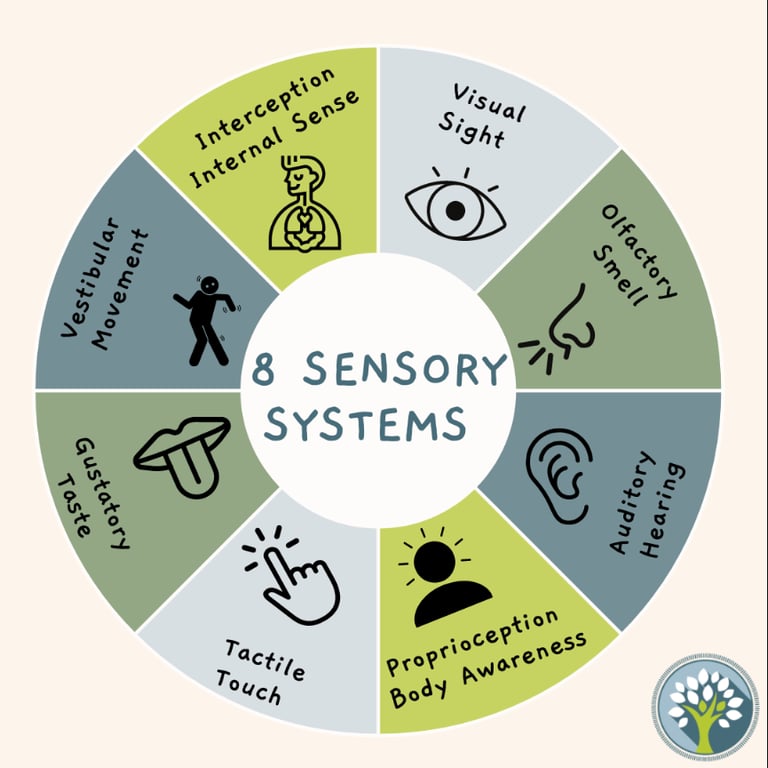
Your sensory system—touch, movement, sound, vision, smell, taste, and internal body cues—is the foundation your brain uses to build its predictions. When sensory input is overwhelming, inconsistent, or misunderstood, the brain’s predictions become less accurate. But when sensory input is consistent, supportive, and calming, the brain can become more flexible and better able to update those predictions.
That’s why sensory regulation is such an important treatment focus used to promote FND recovery.
Below are three practical ways to use sensory strategies to support brain‑body rewiring and improve symptom management.
1. Learn About Your Sensory System and Your Sensitivities
Everyone has a unique sensory profile. Some people are sensitive to noise or bright lights. Others crave movement or deep pressure. Sensory sensitivity is a common symptom for those with FND, but most either do not realize this change or its effect on daily functioning.
Start by noticing:
What environments drain you.
What sensations help you feel grounded.
What triggers symptoms or increases tension.
What textures, sounds, or movements feel calming.
This awareness alone can shift how your brain interprets incoming information. When you understand your sensory patterns, you can begin to shape your environment in ways that support regulation instead of constant feelings of being overwhelmed.
2. Try Different Sensory Supports to Create a Calmer Nervous System
Sensory tools aren’t just for kids—they’re powerful nervous system regulators for adults too. The goal isn’t to “fix” anything but to give your brain consistent, predictable information that helps it feel safe.
Some simple options include:
Deep pressure: weighted lap pads, heavy blankets, compression clothing
Movement: gentle rocking, walking, stretching, vestibular input (i.e. swinging)
Sound: white noise, calming music, noise‑reducing headphones (used occasionally)
Touch: grounding stones, textured objects, warm or cool temperatures
Visual supports: soft lighting, reduced clutter, calming colors
Experiment with different tools and notice what helps your body settle. The right sensory supports can quiet the disruptive noise in your nervous system and make it easier for your brain to update its predictions.
3. Use These Strategies Proactively—Not Just When Symptoms are at their worst
This is the step most people miss.
Sensory regulation is most effective when it’s proactive and consistent, not reactive. If you only reach for supports when you’re having symptom flairs, your brain is already in a high-alert state and not in a place to self-regulate.
Instead, try weaving small purposeful and supportive breaks into your day:
A few minutes of deep pressure (i.e. tensing and relaxing muscles) before starting work
Noise‑reducing headphones while in busy environments
A grounding object in your pocket (stone, phone, pen, etc.)
Regular engagement in movement breaks
Humming to calm your Vagus nerve
Blowing bubbles during a seated break
and much more
These micro‑regulation moments help your brain stay in a steadier state, making symptoms easier to manage and reducing the intensity of flare‑ups over time.
The Bottom Line
Predictive processing means your brain is always guessing what’s happening next. Sensory regulation gives it better information to work with. By understanding your sensory system, using supportive tools, and practicing them proactively, you create the conditions your brain needs to rewire—and you build a more stable foundation for managing FND symptoms.

15800 Manchester Rd., Cornerstone Building, Studio B, Ellisville, MO 63011 (636) 254-7760
FND Treatment Missouri/Illinois
Occupational Therapy Pain Management